Health and Safety Policy for Paddington Carpet Cleaners
 Paddington Carpet Cleaners is committed to maintaining a safe, healthy, and well-managed workplace for employees, clients, contractors, and visitors. This Health and Safety Policy sets out the standards we follow to reduce risk, support safe working practices, and ensure all carpet cleaning activity is carried out with care and responsibility. We believe that good safety management is not only a legal and operational requirement, but also a core part of delivering a reliable and professional service.
Our approach to health and safety is based on prevention, communication, and continuous improvement. We assess workplace risks, provide appropriate equipment, and ensure staff understand the hazards associated with cleaning chemicals, electrical equipment, wet floors, manual handling, and work in occupied premises. Every team member is expected to take personal responsibility for safe conduct and to act in a way that protects others as well as themselves.
We recognise that carpet cleaning can involve a range of potential hazards, including slips, trips, exposure to cleaning agents, lifting equipment, and operating machines in confined spaces. Paddington carpet cleaning operations therefore follow clear procedures to reduce these risks, including pre-job checks, safe product use, and careful control of working areas. This policy applies to all normal business activities and is reviewed regularly to remain effective and current.
Policy Principles
 The main principles of this policy are to prevent injury, protect health, and maintain a safe environment throughout every stage of service delivery. We will do this by identifying foreseeable hazards, applying suitable control measures, and reviewing working practices where needed. We will also ensure that all staff are encouraged to report concerns, near misses, and incidents promptly so that corrective action can be taken without delay.
Responsibilities
Management is responsible for setting safety standards, providing resources, and ensuring that procedures are understood and followed. This includes supplying suitable personal protective equipment, maintaining cleaning machinery in safe condition, and arranging training where required. Supervisors must monitor work practices, check that risk controls are applied, and stop work if conditions become unsafe.
Employees are expected to follow instructions, wear appropriate protective equipment, use cleaning products correctly, and handle tools and machinery responsibly. They must also keep work areas tidy, place warning signs where needed, and avoid any action that could endanger themselves or others. All staff share a duty to support a positive safety culture and to raise concerns as soon as they arise.
 Before any job begins, a suitable assessment is completed to identify site-specific risks. This may include checking access routes, floor conditions, electrical supply points, ventilation, and the presence of children, pets, or vulnerable individuals. Where a hazard cannot be removed entirely, appropriate controls are put in place to reduce the risk to an acceptable level. Risk assessment is treated as a practical working process, not a paperwork exercise.
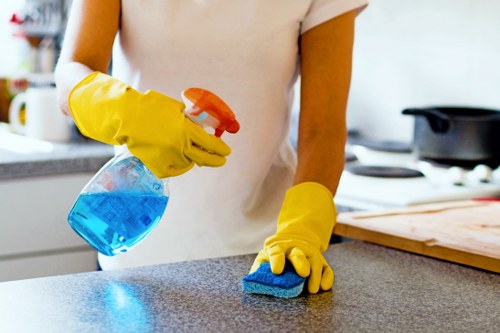
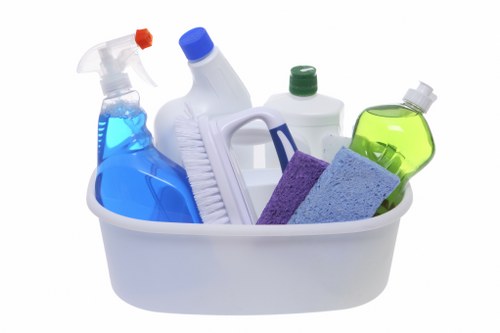
Cleaning agents and treatments are selected carefully to ensure they are suitable for the task and used in line with manufacturer instructions. Products are stored securely, labelled clearly, and handled to prevent spillages, contact irritation, or harmful fumes. Staff are trained to use only the quantity required and to avoid mixing chemicals unless specifically approved. Good ventilation is encouraged whenever products are in use.
Electrical and mechanical equipment must be inspected before use and maintained in safe working order. Leads, plugs, hoses, and machines are checked for signs of wear or damage, and faulty items are removed from service immediately. Employees must not use equipment they have not been trained to operate. Any defect or unusual performance must be reported without hesitation.
Safe Working Practices
To prevent slips and falls, wet floors are controlled with clear signage, restricted access where necessary, and careful cleaning methods that limit excess moisture. Staff should keep cables managed safely, remove obstacles from walkways, and dry treated areas where practical. Good housekeeping is essential at all times, especially when working in homes, offices, or shared buildings.
Manual handling is approached with caution to reduce strain and injury. Employees are encouraged to assess the load before lifting, use correct posture, and request assistance for heavy or awkward items. Where suitable, equipment such as trolleys or lifting aids should be used to minimise physical effort. Safe handling practices are a key part of day-to-day operations.
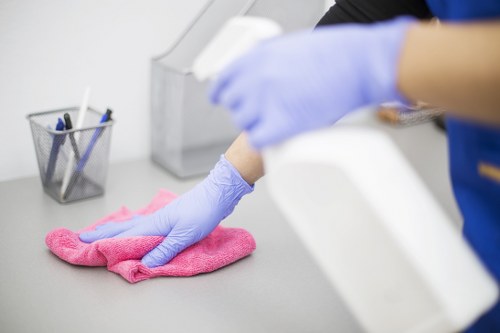
Personal protective equipment may include gloves, protective footwear, eye protection, or other items depending on the task. PPE must be worn correctly, kept clean, and replaced when worn or damaged. It should never be treated as a substitute for other controls, but as an additional layer of protection supporting safe work.
Training, Reporting, and Review
 Training is provided so that staff can understand the risks involved in carpet cleaning and the measures required to control them. Induction covers safe chemical use, equipment operation, emergency action, manual handling, and incident reporting. Refresher training is arranged when procedures change or when additional support is needed to maintain standards.
Any accident, near miss, or unsafe condition must be reported as soon as possible so that action can be taken quickly. Incidents are investigated to identify root causes and prevent recurrence. We treat reporting as a positive safety measure, not as blame. This helps build trust and strengthens our ability to improve continuously.
In the event of an emergency, staff must follow the relevant site procedure, protect themselves and others, and seek assistance where appropriate. This may involve isolating equipment, managing spillages, or leaving the area if conditions pose an immediate danger. Emergency preparedness is reviewed to ensure responses remain practical and effective.
 This policy is monitored and reviewed regularly to ensure it remains suitable for the work we carry out and the risks we face. Changes in equipment, materials, staffing, or working methods may require updates. Paddington Carpet Cleaners is committed to maintaining high standards of safety, promoting responsibility at every level, and delivering services in a way that protects people and property. By following this policy, we aim to create a safer workplace and a more dependable service for everyone involved.